Fossil Shark Teeth, the early years.
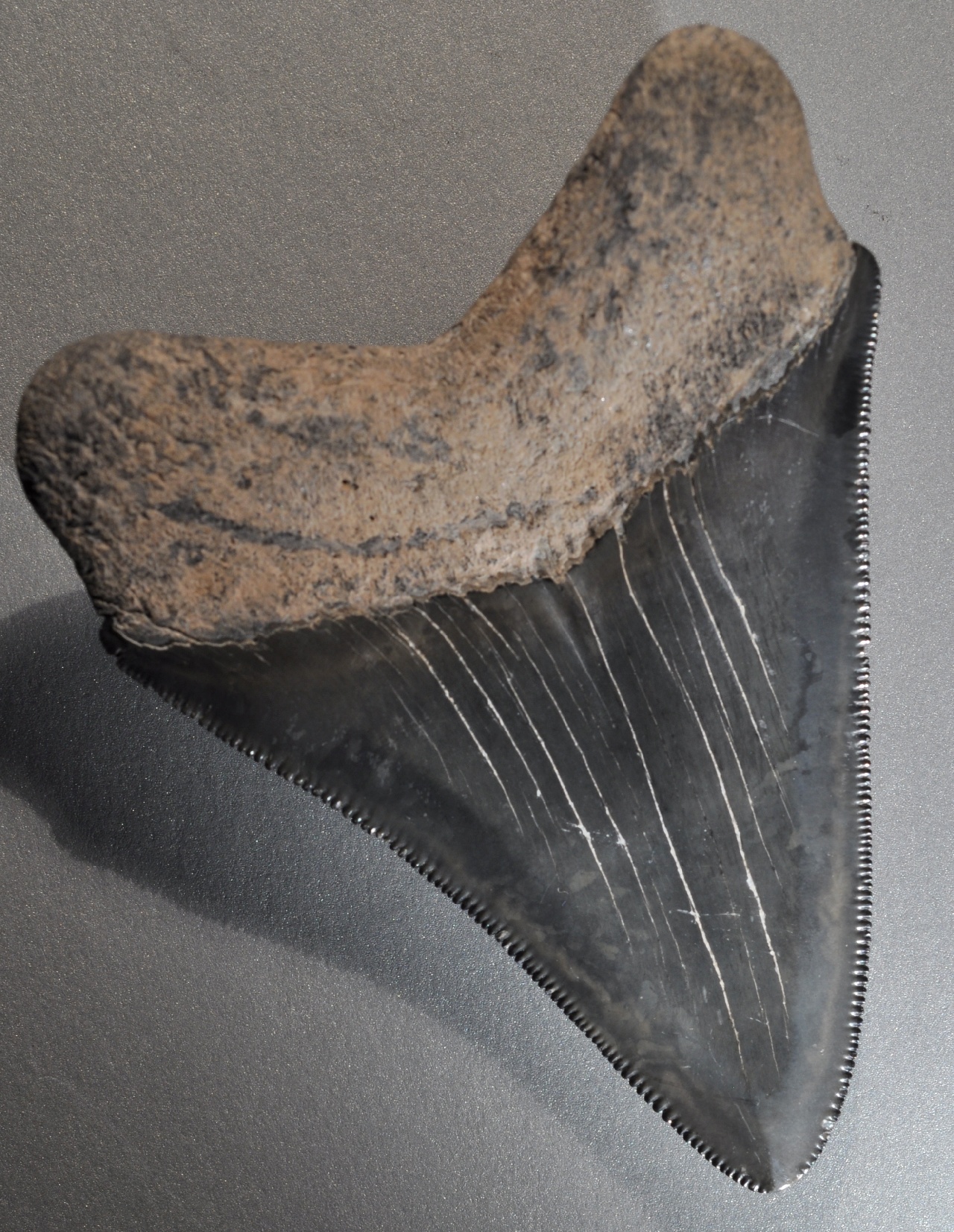
I blame this 3.5 inch fossil Megalodon tooth for all the others that followed!
Megalodon was a 50 ft long huskier version of the Great White, with teeth reaching 7 inches in length! This makes my fossil tooth 1/2 maximum size!
It all starts way back, about 400 million years ago in the Devonian Period of the Paleozoic Era.
That`s a good 150 million years before the dinosaurs...
Fish with jaws had been around for about 30 million years already when this fellow shows up:
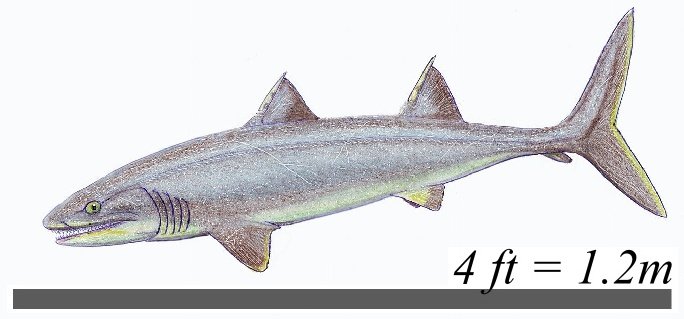
Glikmanius occidentalis (formerly: Cladodont or Cladoselache), about 4 ft in length and
with most of the characteristic shark qualities other than the mouth being closer to the end of its nose. This 1cm fossil tooth is quite unique.
Notice the numerous cusplets, the striations running up on the front, and the way the main tip of the tooth is curved back into the rock.
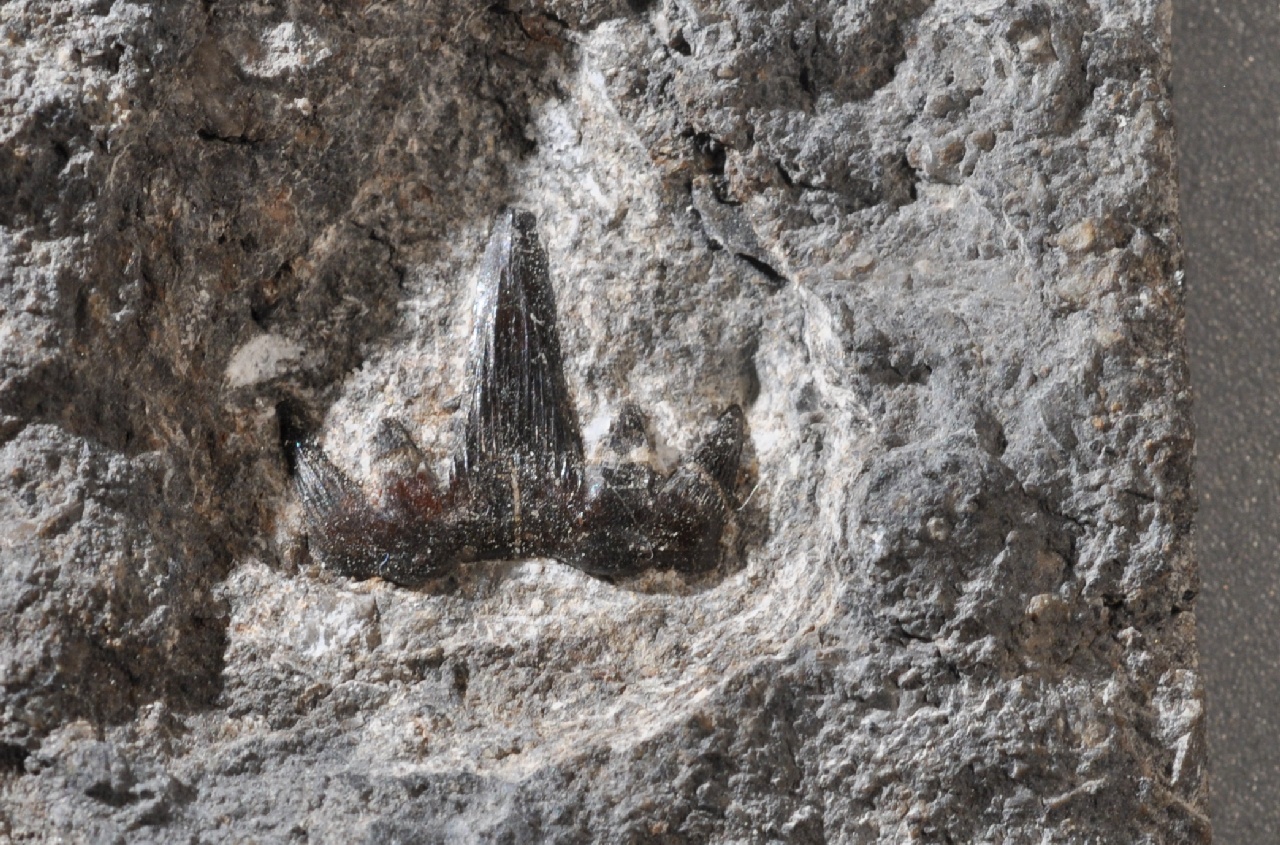
This tooth dates to 330 million years ago, found in Arkansas, in the Pitkin Formation.
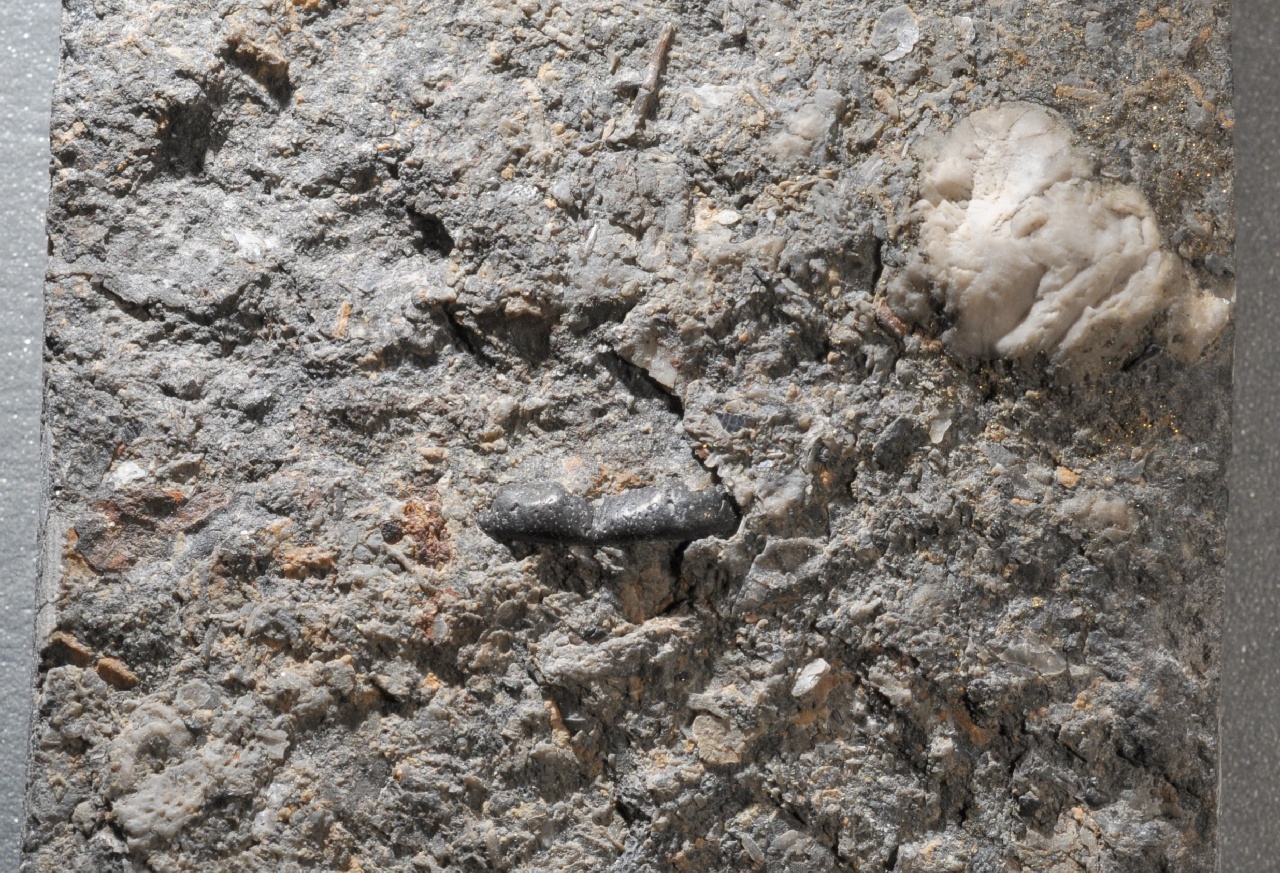
It looked like it had been carved out of the rock, but a look at the back of the fossil showed why they knew it was there.
The rather flat and wide base of the tooth was protruding from the rock.
Then as the millions of years passed by, sometime around 220 million years ago, this 5 ft shark appears.
It`s now the Triassic, during the early years of the dinosaurs, and there seemed to be about 5 different sharks around.
This fellow, Synechodus (who may have one other ancestor between it and Glikmanius), is the last of the old sharks,
and it is the likely ancestor of all the the new (modern) sharks. It has a dogfish look to it
and has these many-cusped teeth which share many features of the previous tooth.
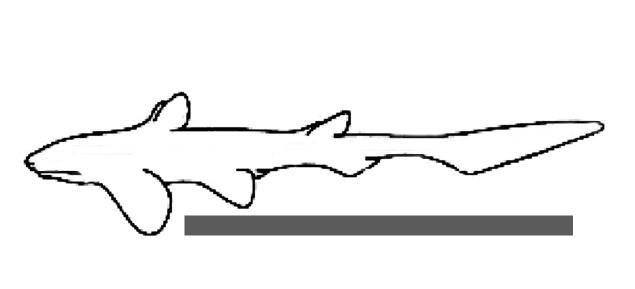
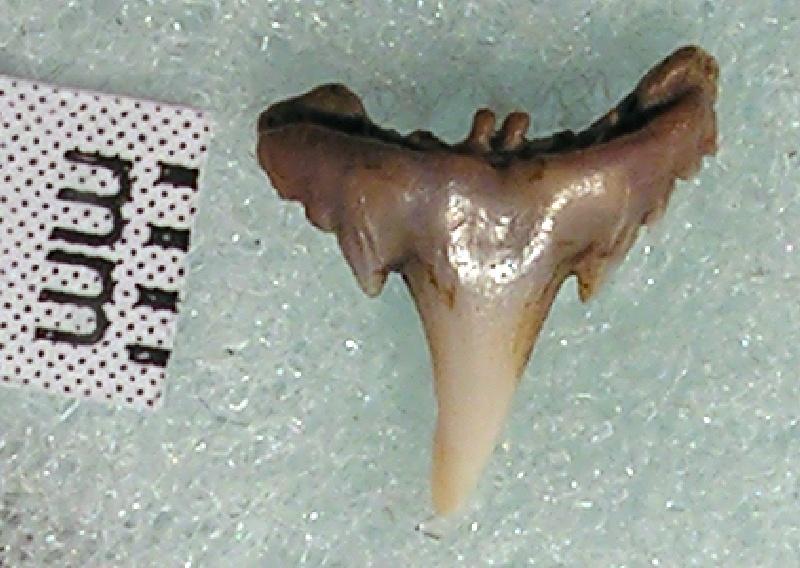
This particular tooth, Synechodus lerichei, from Kazakhstan, dates to about 85 million years ago,
some 30 million years before the Synechodus disappear from the fossil records. If you follow the tooth shapes into the modern sharks,
these three lineages caught my attention:
Sand Tiger sharks,
Great White sharks,
...and Megalodon!
back to hobby page